How it works
From image to text in five steps
Transkribus uses a multi-stage AI pipeline to turn document images into accurate, searchable text.
Upload
Drag in a photo, scan, or PDF
Layout Analysis
AI detects text regions, columns, and tables
Line Detection
Individual text lines are identified
AI Recognition
Neural networks read each line character by character
Digital Text
Editable, searchable text with confidence scores
What it reads
Handwriting, print, typewritten — and everything in between
Transkribus doesn't just handle one type of text. The AI recognizes handwriting from any century, printed text in any font, typewritten documents, and even mixed pages where handwriting and print appear together. Damaged, faded, or low-contrast documents work too.
Cursive handwriting, block letters, and connected scripts
Historical scripts: Kurrent, Sütterlin, Fraktur, and more
Printed text in any font, including old typefaces
Typewritten documents, even with corrections and overstrikes
Mixed pages with handwriting, print, stamps, and annotations
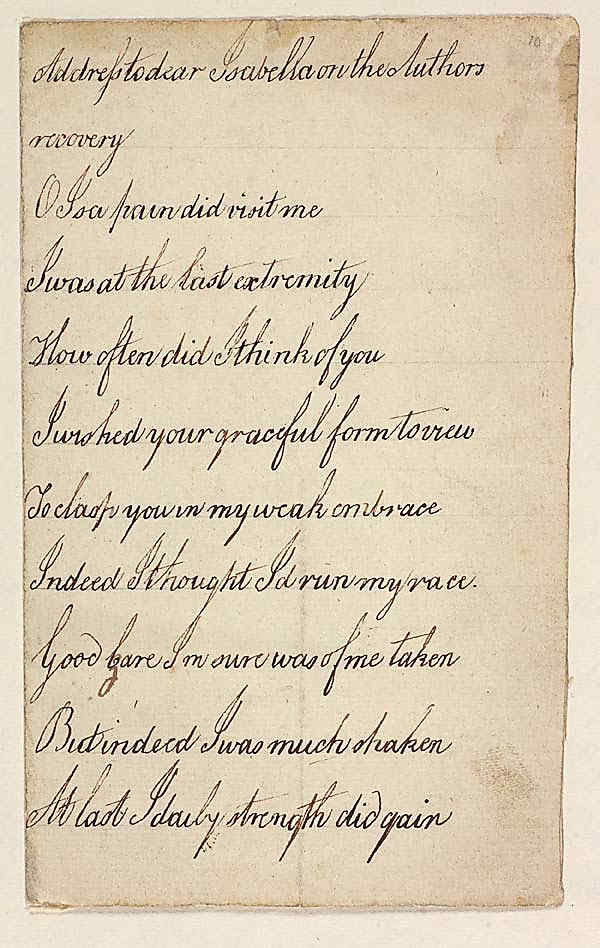
Addres to dear Isabella on the Authors
recovery
O Isa pain did visit me
I was at the last extremity
How often did I think of you
I wished your graceful form to view
To clasp you in my weak embrace
Indeed I thought Id run my race
Good Care Im sure was of me taken
But indeed I was much shaken
At last I daily strength did gain
AI models
300+ public models — or train your own
The Transkribus community has trained over 300 public AI models for different scripts, languages, and document types. Use one out of the box, or train a custom model on your own documents for even higher accuracy. Training takes as few as 50 transcribed pages.
Text Titan I: our flagship model for general handwriting and print
Specialized models for Kurrent, Arabic, Hebrew, Cyrillic, and more
Community-trained models shared freely across the platform
Custom training on your specific handwriting or document type
Models improve continuously as more training data is added

At scale
Process thousands of pages automatically
The demo handles one page at a time. The full platform handles thousands. Upload entire collections, run recognition in batch, then search, edit, and export the results. Transkribus is built for projects that range from a few letters to millions of archival pages.
Batch processing for large collections and archives
Automatic layout analysis for complex page structures
Full-text search across all recognized documents
Built-in editor for corrections and quality control
Export as TXT, DOCX, PDF, TEI-XML, PAGE XML, or ALTO

Comparison
AI text recognition vs. standard OCR
| Feature | Transkribus | Standard OCR |
|---|---|---|
| Printed text | Yes | Yes |
| Handwriting | Yes | Limited |
| Historical scripts | Yes | No |
| Custom model training | Yes | No |
| Layout analysis | Yes | Limited |
| 100+ languages | Yes | Limited |
| European hosting (GDPR) | Yes | Limited |


For developers
Integrate AI text recognition via API
Build text recognition into your own applications, pipelines, or content management systems. The Transkribus REST API gives you programmatic access to all models, layout analysis, and batch processing — with structured JSON output.
REST API with full documentation
Use any public model or your own custom model
Structured output with coordinates and confidence scores
Batch processing for large-scale digitization
response.json
{
  "status": "FINISHED",
  "content": {
    "regions": [
      {
        "lines": [
          {
            "text": "Dear Sir,",
            "confidence": 0.97
          }
        ]
      }
    ]
  }
}Ready to recognize your documents?
Create a free account to process unlimited documents, train custom models, and unlock the full platform.
50 free credits every month – No credit card required
200M+Pages processed
500K+Users worldwide
300+Public AI models