Success Stories
Discover how researchers, archivists, and institutions use Transkribus to unlock handwritten historical documents.
47 success stories
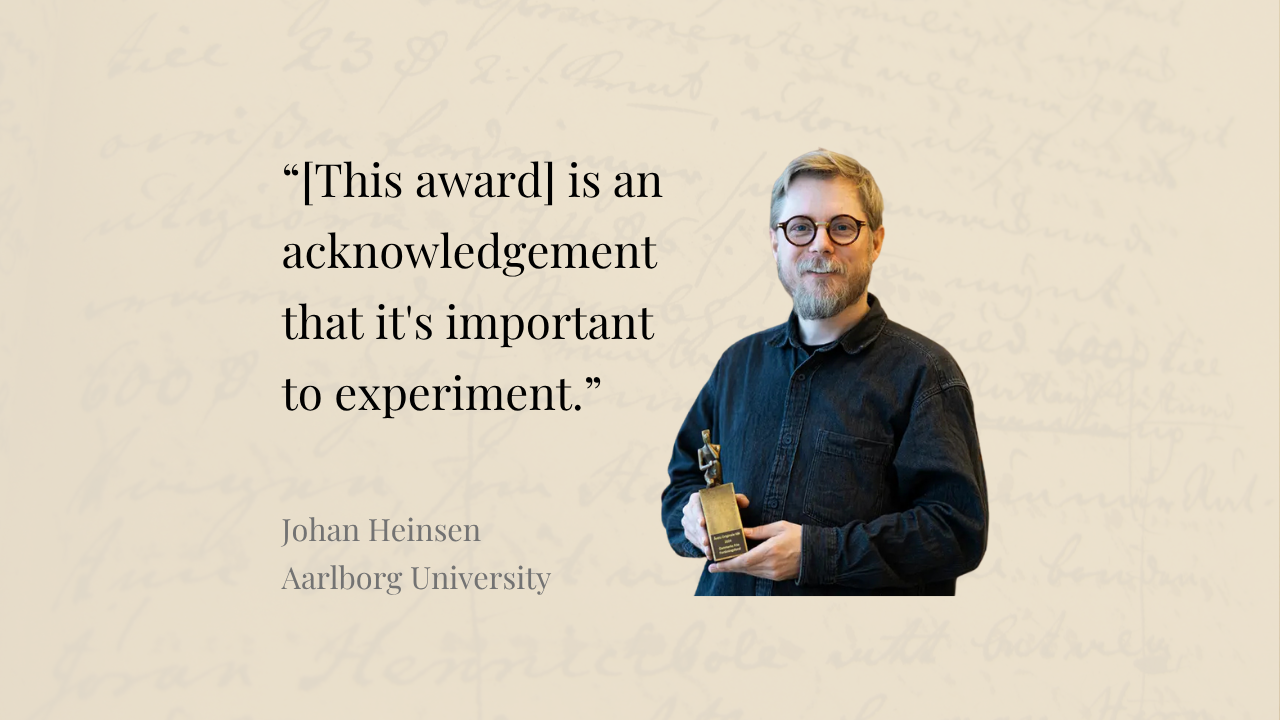
Enevældens Nyheder Online: An award-winning project to create digital versions of historical newspapers
If you wanted to study social control under absolutist rule, there are many historical sources that could be of interest. Administrative records, land registers, and royal decrees are just some of...
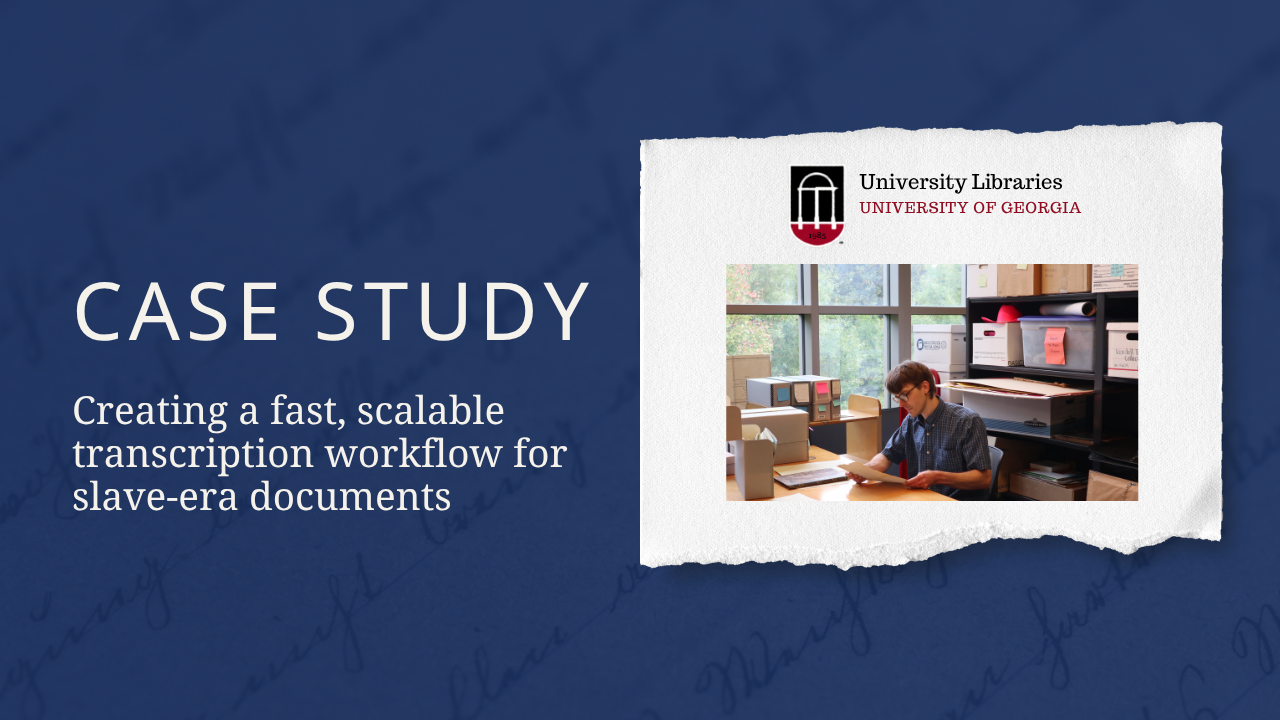
Sustainable efficiency: How the University of Georgia transcribed 20,000 pages in two months
The Finding Their Names: Discovery and Description of Enslavement Events project is a major initiative by the Hargrett Rare Book and Manuscript Library at the University of Georgia. Funded by a...
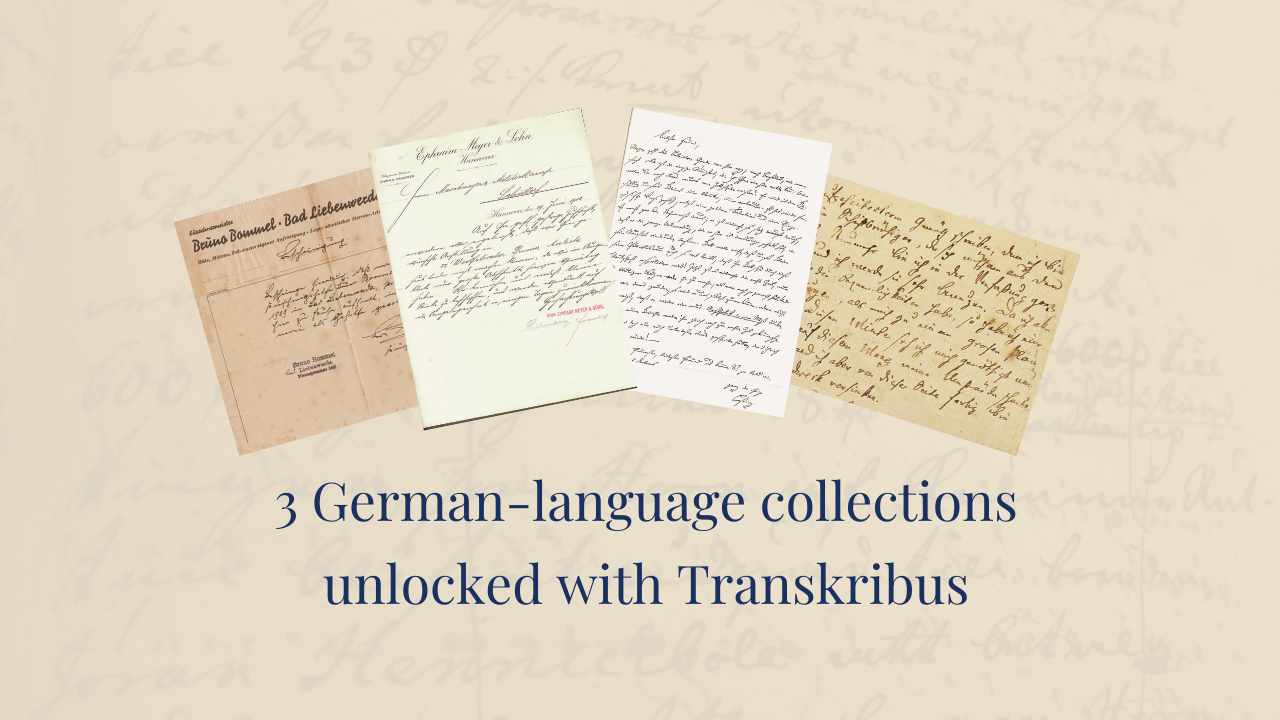
AI Made for German: Unlocking German-language archives with Transkribus
Most AI transcription tools are designed with English-language material as their default setting. They excel at modern printed text and increasingly handle contemporary handwriting, but historical...
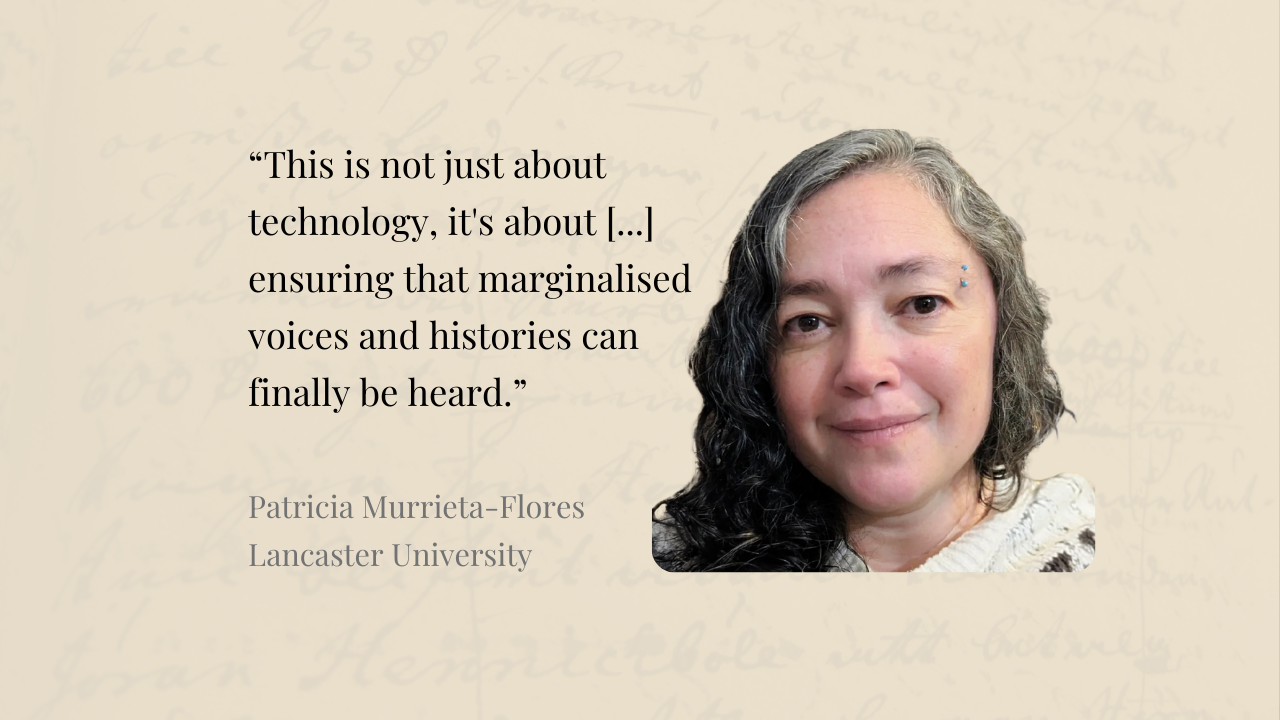
Unlocking the secrets of the New Spain Fleets with Patricia Murrieta-Flores
Historians of colonial Latin America don’t suffer from a lack of primary sources. Across archives in Europe and the Americas lie millions of pages documenting the colonial maritime routes known as...
How the University of Helsinki teaches Transkribus to students
Text recognition and AI are quickly becoming essential tools for historians, offering powerful ways to study, process, and access huge collections of archival material. To make sure the next...
How the German Archives for Diaries preserve personal history for future generations
The German Archives for Diaries (Deutsches Tagebucharchiv, DTA) in Emmendingen has one core mission: Collecting and archiving autobiographical records and making them accessible for academic and...
Unlocking Sakya texts: Creating a workflow for cataloguing Tibetan manuscripts
Tibetan is one of the world’s major literary languages, with vast collections of philosophical, religious, historical, grammatical, and medical texts written in the language. It is also the language...
Charting new waters: How 3 projects opened up maritime archives with AI transcription
Maritime history is a field that explores humanity's relationship with the oceans, seas, and waterways of the world. While ships and naval battles are the focus of some maritime historians, others...
Reading the unreadable: How 4 projects deciphered early modern documents with Transkribus
The early modern period marks the transition from the medieval world to the industrialised modern era. It laid the groundwork for many of today's societal and economic structures, such as...
Creating a model to transcribe 250,000 specimen labels at the Museum für Naturkunde Berlin
The Museum für Naturkunde Berlin - Leibniz-Institute for Evolution and Biodiversity Science (MfN) is one of the largest institutions of its kind in Germany, with an expansive collection of natural...
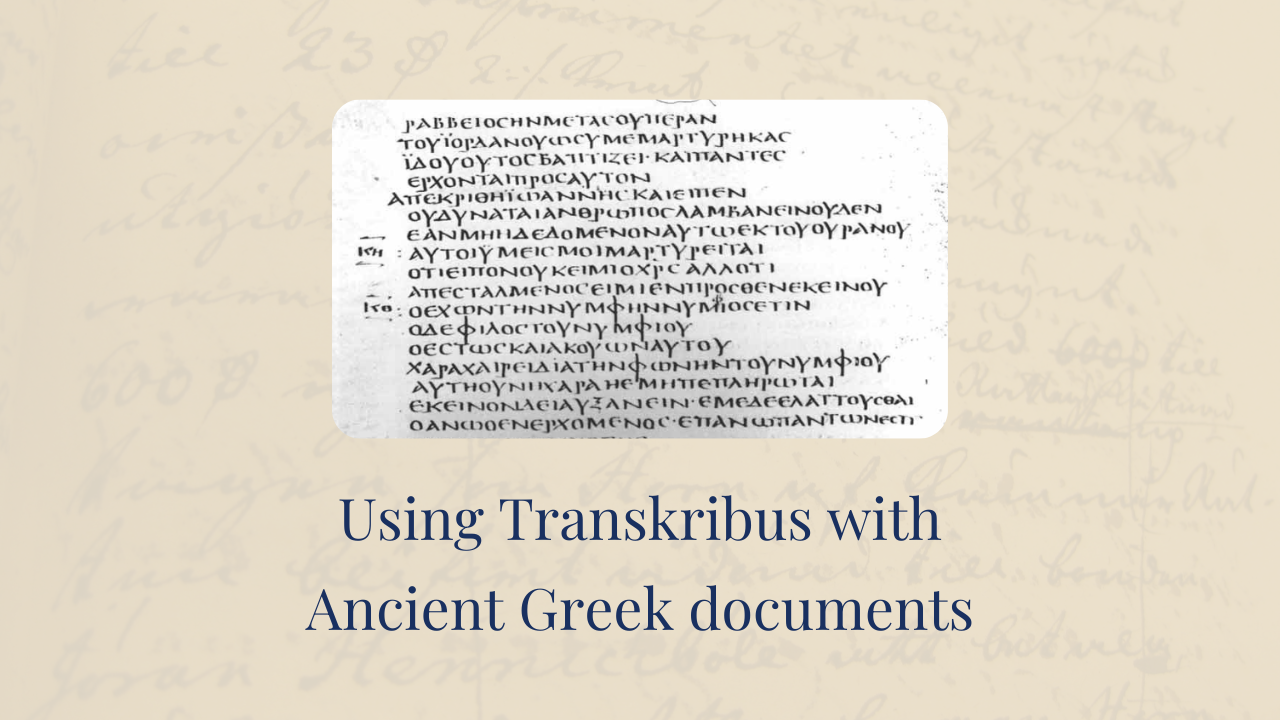
Transcribing Ancient Greek with Transkribus: 3 Case Studies
Of all the world’s ancient cultures, it is perhaps Ancient Greece that has had the most enduring impact on Western civilisation. From philosophy and politics to drama and science, the texts produced...
How Transkribus unlocked these Spanish-language collections
The Spanish language is not only an important language in today's world, but it has also played a crucial role throughout history. From the early modern period to more recent times, Spanish was the...